
Bahr El-Baqar Wastewater Treatment Plant: Redefining Large-Scale Water Reuse Engineering in Egypt
The growing global water crisis is forcing nations to rethink conventional approaches to water management. In arid and water-stressed regions, wastewater is increasingly being recognized not as waste, but as a recoverable strategic resource. Egypt’s Bahr El-Baqar Wastewater Treatment Plant stands as one of the most significant examples of this transformation, representing a major advancement in large-scale wastewater reuse engineering.
CASE STUDYEDUCATIONAL
Rimashree
5/19/20264 min read
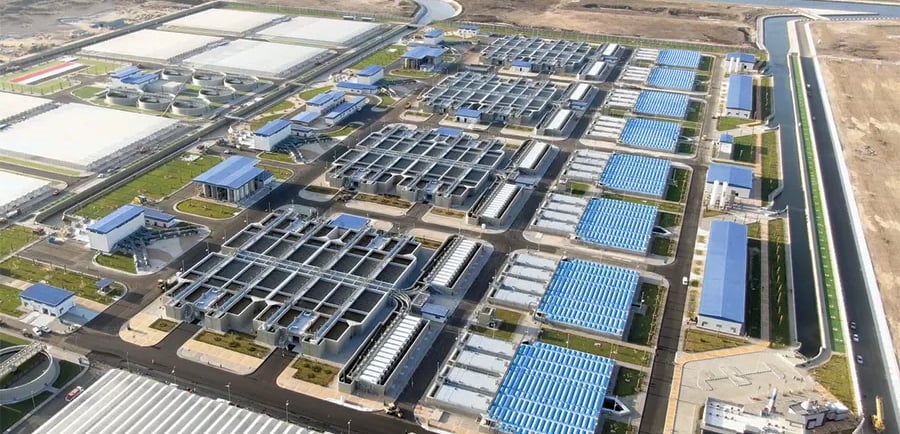
Commissioned in 2021, the Bahr El-Baqar facility is regarded among the largest wastewater treatment plants in the world, with a treatment capacity of approximately 5.6 million cubic meters per day. Developed as part of Egypt’s national water security strategy, the project supports agricultural expansion in the Sinai Peninsula while simultaneously addressing environmental pollution and freshwater scarcity.
Strategic Importance of the Project
Egypt’s dependence on the Nile River, combined with rapid population growth, industrial expansion, and increasing agricultural demand, has intensified pressure on the country’s limited freshwater resources. The Bahr El-Baqar project was developed to address these challenges through large-scale wastewater reclamation and reuse.
The facility primarily treats wastewater collected through the Bahr El-Baqar Drain, a major drainage canal transporting agricultural, industrial, and municipal effluents. Historically, the drain discharged polluted water into Lake Manzala, contributing to severe environmental degradation.
By intercepting and treating this wastewater stream, the plant achieves multiple engineering and environmental objectives:
Reduction of pollutant discharge into natural water bodies
Reclamation of wastewater for irrigation use
Support for desert agriculture and land reclamation
Improvement of regional environmental quality
Enhancement of long-term water resilience
The treated water is conveyed beneath the Suez Canal and discharged into Sheikh Jaber Canal to support the irrigation of nearly 400,000 feddans of agricultural land in Sinai.
Facility Design and Infrastructure
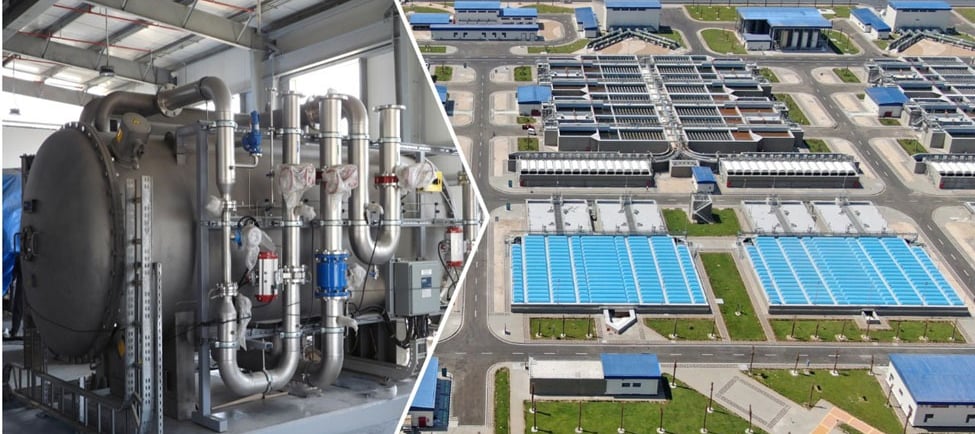
The Bahr El-Baqar treatment complex occupies approximately 155 feddans and integrates advanced hydraulic, mechanical, electrical, and process engineering systems.
The facility consists of:
Four identical physical and chemical treatment units
Two sludge treatment units
High-capacity intake pumping stations
Intelligent process monitoring and control systems
Internal utility and transportation infrastructure
The engineering scale of the project is particularly notable due to the extremely high daily treatment volume and the complexity of integrating tertiary treatment processes at such capacity.
Treatment Process Engineering
The treatment process at Bahr El-Baqar incorporates multiple stages designed to achieve high-quality reclaimed water suitable for agricultural reuse.
Preliminary Treatment and Intake Systems
The treatment cycle begins at the intake structures, where wastewater first passes through coarse and fine screening systems. These units remove large debris, suspended solids, and floating materials that could damage downstream mechanical equipment.
Heavy-duty intake pumps then transfer the wastewater into the primary treatment system under carefully controlled hydraulic conditions.
Efficient pre-treatment is essential in mega-scale wastewater facilities, as it directly influences the operational reliability and maintenance requirements of downstream processes.
Coagulation, Flocculation, and Sedimentation
Following screening, wastewater enters the physical and chemical treatment phase. Chemical dosing systems are utilized to regulate pH levels and promote coagulation and flocculation processes.
These reactions destabilize fine suspended particles and allow them to aggregate into larger flocs suitable for sedimentation.
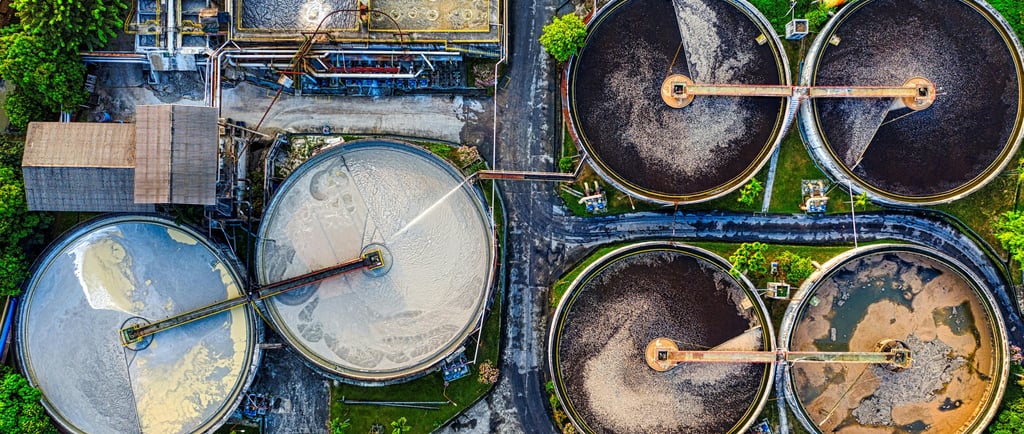
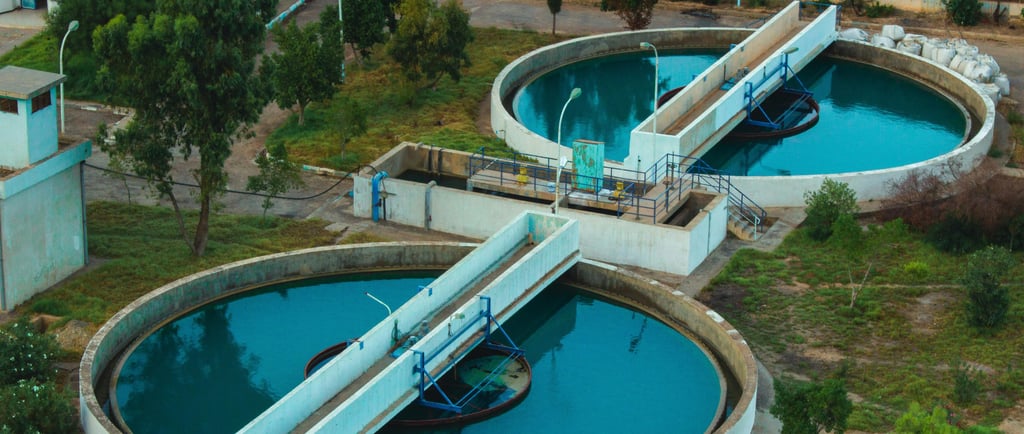
One of the key engineering features of the Bahr El-Baqar plant is its lamella sedimentation system, covering approximately 11,600 m². Lamella clarifiers utilize inclined plate technology to significantly increase settling efficiency while minimizing land footprint requirements.
Compared with conventional sedimentation basins, lamella systems offer:
Higher solids removal efficiency
Improved hydraulic loading capacity
Reduced retention time
More compact infrastructure design
This stage substantially reduces suspended solids and organic loading prior to tertiary filtration.
Advanced Disc Filtration Technology
The tertiary treatment system represents one of the facility’s most technically advanced components.
The plant incorporates:
120 triple-disc filtration units
Individual filtration capacities of approximately 1,992 m³/h
Fine polyester membrane surfaces totaling nearly 32,800 m²
Filtration precision reaching 10 microns
Disc filtration technology enables the removal of fine suspended particles that remain after sedimentation, ensuring the production of high-quality irrigation water.
The use of automated disc filtration systems provides several operational advantages:
Continuous self-cleaning operation
Reduced maintenance requirements
High filtration efficiency
Stable hydraulic performance under fluctuating flow conditions
Such tertiary filtration systems are increasingly becoming standard in advanced wastewater reclamation projects globally.
Ozone and Chlorine Disinfection Systems
Following filtration, the reclaimed water undergoes sterilization through ozone injection and chlorination systems.
Ozone treatment plays a critical role in:
Pathogen destruction
Oxidation of residual organic compounds
Odor reduction
Improvement of water clarity
Compared with conventional chlorination alone, ozone offers superior oxidation efficiency and minimizes the formation of harmful disinfection byproducts.
Chlorination is subsequently applied to maintain residual disinfection during water transport and storage.
The integration of dual disinfection systems enhances overall treatment reliability and ensures compliance with irrigation water quality standards.
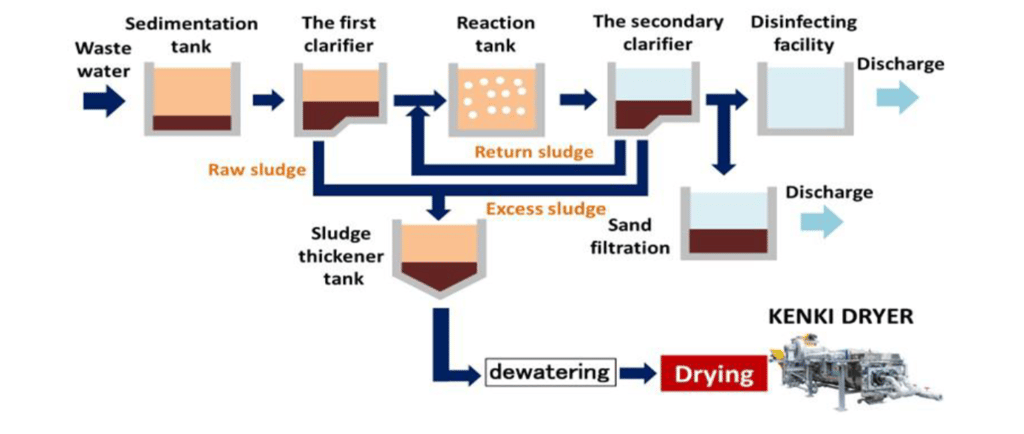
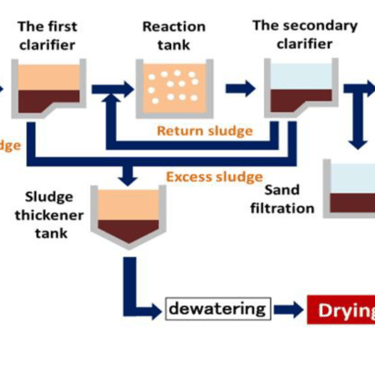
Sludge Treatment and Resource Recovery
Sludge management constitutes a major operational component of the Bahr El-Baqar project.
The sludge treatment line includes:
Sludge thickening basins
Mechanical dewatering systems
Solar sludge drying facilities
Initially, sludge extracted from sedimentation units undergoes thickening and stabilization before entering mechanical drying systems, achieving approximately 24% dryness.
The partially dried sludge is then transferred to solar drying units, where moisture content is further reduced to achieve nearly 75% dryness.
The recovered sludge can subsequently be utilized in:
Cement brick manufacturing
Construction backfilling materials
Agricultural land reclamation applications
This integrated sludge recovery approach aligns with modern circular economy principles and sustainable waste management strategies.
Automation and Operational Control
Given the enormous scale of operations, the plant relies heavily on intelligent automation and centralized monitoring systems.
The facility incorporates:
SCADA-based operational management
Real-time water quality monitoring
Automated process control systems
Integrated communication and power infrastructure
Automation enables improved operational stability, optimized energy consumption, rapid fault detection, and enhanced treatment consistency.
Conclusion
The Bahr El-Baqar Wastewater Treatment Plant represents a landmark achievement in modern water infrastructure engineering. Through the integration of advanced sedimentation systems, high-capacity tertiary filtration, ozone disinfection technologies, and large-scale sludge recovery operations, the project establishes a new benchmark for sustainable wastewater reuse.
As water scarcity intensifies globally, projects such as Bahr El-Baqar demonstrate the growing importance of wastewater reclamation in ensuring long-term environmental resilience, agricultural sustainability, and strategic water security.
Photo courtesy Arab Contractors Co.
Photo courtesy Arab Contractors Co.
Photo by Tom Fisk
Photo courtesy Arab Contractors Co.