
Revolutionizing Sustainable Water Management in Industrial Parks with Electromagnetic Flow Meters
Shanta Colibri India Private Limited (SCIPL) bring integrate technology products and solutions to upgrade old infrastructure and introduce newer implementations. This a Blog Post on implementing a Smart Water Metering Solution to an entire Industrial Park.
CASE STUDYEDUCATIONAL
Rimashree
2/23/20257 min read


Background
Borjora Pasto Industrial Park is a growing industrial hub in West Bengal, aimed at fostering manufacturing and economic growth in the region. With its strategic location, modern infrastructure, and support from the state government, it is poised to attract investments and contribute to the state’s industrial development, while generating employment and fostering local business growth.
As water serves as the lifeblood of an industrial park, driving cooling systems, fuelling production processes, ensuring cleanliness, and supporting a myriad of manufacturing and operational functions that keep everything running smoothly. Conserving water in an industrial park becomes crucial not just for cutting costs and meeting regulations, but for nurturing a sustainable future where every drop counts and our planet thrives. A battery-operated electromagnetic flow meters with inbuilt transmitter, champion sustainability by delivering precise flow measurements that help industries reduce resource waste and optimize water usage, paving the way for a more efficient and eco-friendly future.
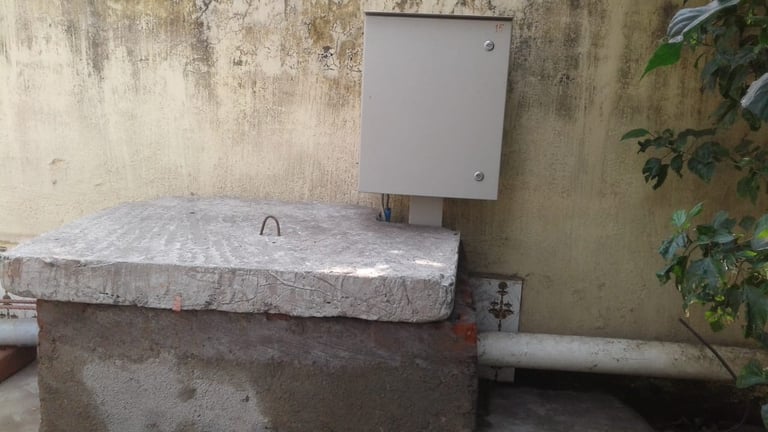
The Hidden Challenges while Installing Electromagnetic Flow Meters
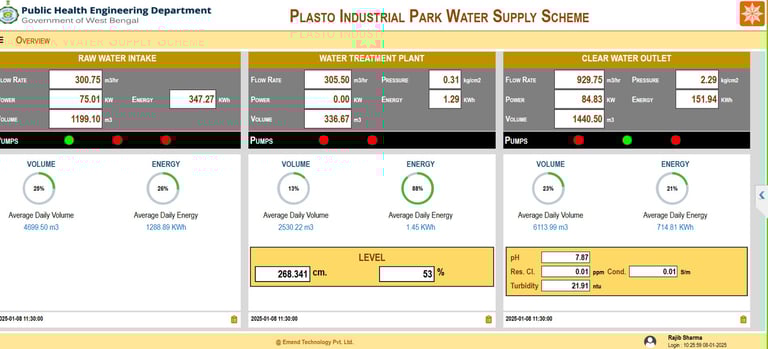
A battery-operated Electromagnetic flow meters with cloud-based data logger for remote data transmission are fantastic tools for measuring water flow with high precision. By integrating various sensors (such as pH sensor, TDS Sensor, Turbidity Sensor) with Ultrasonic Level Transmitter and a Remote Terminal Unit (RTU), along with automated SCADA software, smart water management systems can achieve unparalleled reliability and maintenance-free operation under optimal conditions. This innovative approach ensures continuous monitoring and real-time data analysis, transforming the efficiency of water resource management. But the journey to flawless performance doesn’t always start smoothly, installing electromagnetic flow meters can feel like a puzzle, with each piece needing careful consideration to ensure everything fits perfectly.
1. Finding the Perfect Spot for Installation is crucial:
Think of it as picking the best seat in a theatre - too close to the stage (like near pumps or valves) can distort your view (or in this case, your measurements). This means a specific length of straight pipe before and after the meter (usually 5-10 times the diameter of the pipe) is required for optimal accuracy. Flow meters also need to be installed on a stable and flat surface, as vibrations can throw off readings. Electromagnetic flow meters are picky about orientation. Vertical installations or pipes with too much incline can create flow disturbances.
2. Signal Disruption:
Electromagnetic flow meters rely on precise electrical signals to measure flow. But when you’re working in an industrial environment full of pumps, motors and other equipment, these signals are vulnerable to interference. Electrical noise can disrupt the meter’s readings, causing data to go haywire. Proper grounding and shielding are vital, but this can be challenging in environments with high electromagnetic interference (EMI), like an Industrial Park. Voltage spikes or fluctuations can also lead to erratic behaviour or inaccurate readings.
3. System Integration:
Integrating the meter with existing SCADA or control systems can sometimes be challenging. Compatibility issues, older infrastructure or custom configurations may require additional work to ensure the flow meter communicates properly with your monitoring systems.
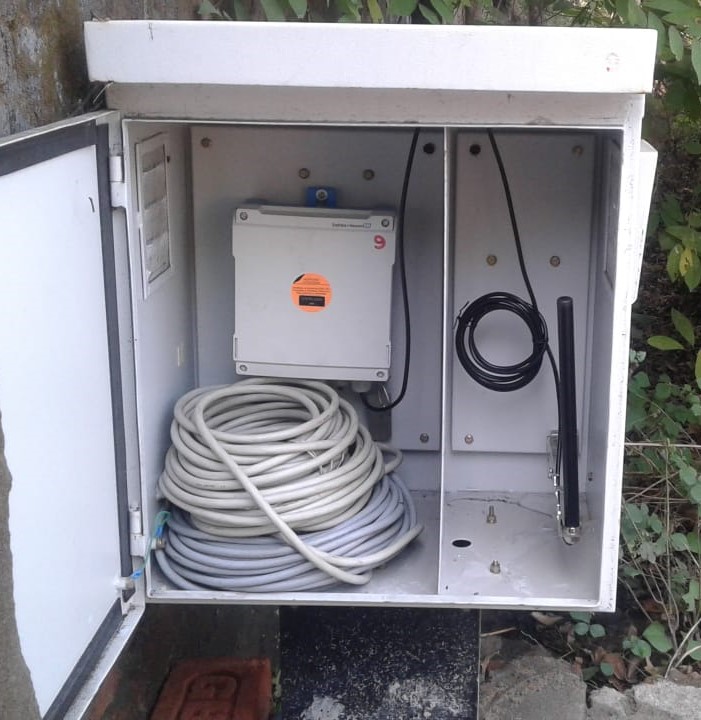
4. Installation Complexity:
Installation isn’t as simple as plugging in the meter. It requires skilled personnel familiar with both the electrical and fluid dynamics aspects of the system. A poorly installed meter can result in inaccurate readings, costly mistakes, or even damage to the equipment. It's important to factor in installation time, expertise, and costs when planning your project.
5. Environmental Factors:
As our site is an industrial park, we have to be aware of
extreme temperature and corrosive environments.
6. Common pitfalls:
Include misalignment, incorrect positioning or failing to fill the measuring pipe completely.
Conquering Installation Challenges: Your Guide to Flow Meter Success
Achieving a successful installation of an electromagnetic flow meter requires thoughtful attention to a variety of elements, such as the ideal location, proper grounding, by navigating common challenges and following best practices throughout the installation process, operators can secure precise measurements and boost operational efficiency. This ambitious project of ours unfolded within a sprawling 432-acre industrial park in Borjora, where we successfully installed 30 electromagnetic flow meters, all thanks to the exceptional skills and dedication of our talented engineers and team members.
Pre-Installation Considerations:
1. Confirm Compatibility - Make sure your mag meter and process fluid are a perfect match. Remember—mag meters thrive on conductivity (minimum ~5 μS/cm). Fluids that don’t play by this rule will throw off readings.
2. Power and Signal Readiness - Stable power and proper grounding are your defences against electromagnetic interference—don’t skip these checks.
3. Account for Environmental Variables - From temperature swings to pressure spikes, prepare for the unexpected by selecting materials and enclosures that can handle tough conditions. Ensure the pipeline size and materials are compatible to create a secure and leak-free connection.
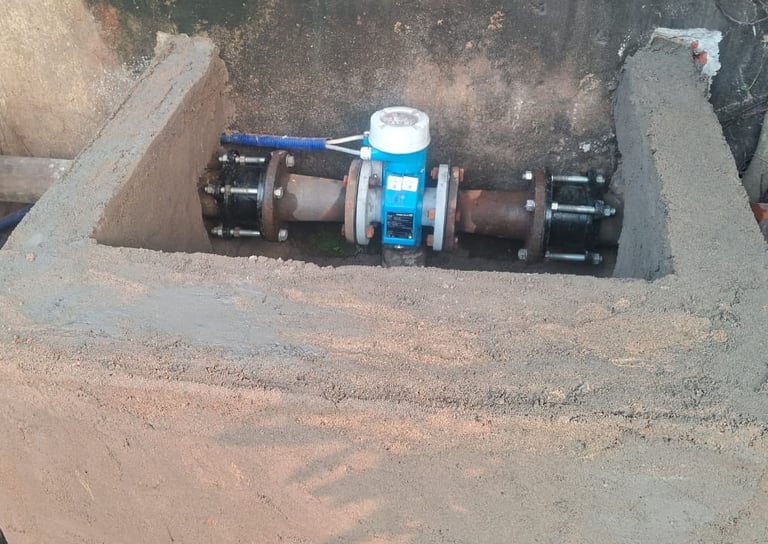
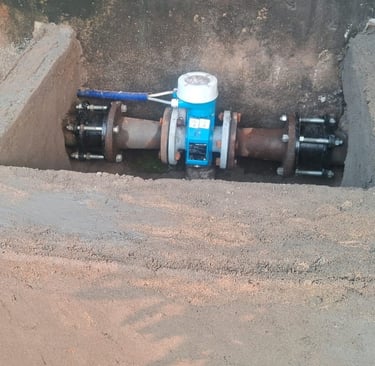
Installation best practices:
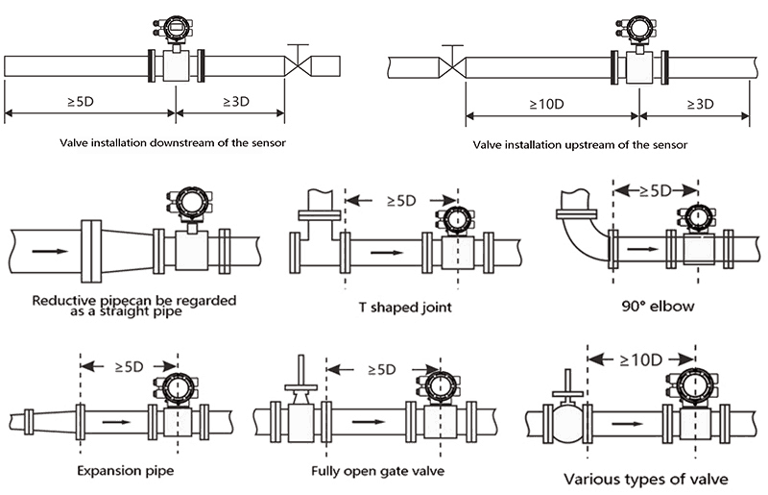
1. Set the stage with Proper placements: Allow a straight path before (5 pipe diameters) and after (3 pipe diameters) the meter to promote smooth flow.
To minimize disturbances, keep clear of pumps, valves, and bends that cause turbulence.
2. Orientation counts: Avoid downward flow setups that risk air pockets. For vertical installs, make the liquid flow upward to dodge air entrapment.
3. Grounding and Shielding: Your Defence System: Grounding rings or electrodes prevent electrical noise—essential for pipelines that aren’t metal.
Shield cables to safeguard against interference from nearby equipment.
4. Seal It Tight: Gaskets and evenly tightened flanges are your allies against leaks. Avoid overtightening, as this can damage sensors.

The integrated smart water management architecture works by:
• Data Acquisition: IoT Sensors and meters act as the smart water management system’s eyes and ears, constantly collecting real-time data on water parameters. Rain gauges measure precipitation, flow meters track consumption, pressure sensors identify leaks, and advanced sensors can even analyse water quality.
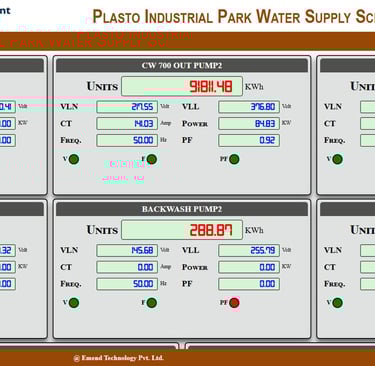
• Data Analysis: The brain of the system. Supervisory Control and Data Acquisition (SCADA) systems gather sensor data and analyse it for trends, potential issues, or leaks. Geographic Information Systems (GIS) integrate this analysed data with geographical information, providing visual representations of water usage patterns across specific regions.
• Automation and Control: The software interprets the analysed data and triggers actions for optimized water usage. Valves might automatically adjust pressure based on sensor readings to prevent leaks, or alerts could be sent to technicians for prompt repairs.
Post-Installation Tips for Smooth Sailing
• Keep an Eye Out: Regularly inspect for corrosion, leaks, or loose connections.
• Stay Updated: Ensure firmware and software are current.
• Monitor Performance: Use diagnostic tools to catch issues early.
• Clean Carefully: Follow manufacturer guidelines for cleaning electrodes and preventing buildup.
Troubleshooting Common Challenges
1. Erratic Readings:
What’s Wrong? Air bubbles or empty pipes.
Quick Fix: Keep the pipe full, add air vents, and tweak orientation.
2. Zero Flow Errors:
What’s Wrong? Faulty grounding or wiring.
Quick Fix: Re-check connections and ground loops.
3. Electrical Interference:
What’s Wrong? High-voltage equipment nearby.
Quick Fix: Relocate cables or beef up shielding.
4. Leaks:
What’s Wrong? Loose or uneven flanges.
Quick Fix: Inspect seals and tighten flanges evenly.

The Transformative Impact of Smart Water Systems
Water is one of our most precious resources, and managing it efficiently has never been more important. Enter smart water systems—a revolutionary approach to monitoring and optimizing water usage. At the heart of these systems are electromagnetic flow meters, the unsung heroes that make intelligent water management possible. Following the intervention, water management in the industrial park improved significantly, with reduced wastage, enhanced monitoring, and optimized resource allocation, setting a benchmark for sustainable practices in industrial operations.
1. Unmatched Accuracy and Reliability
They are highly accurate and reliable due to their design, which eliminates moving parts. They provide consistent readings for both low and high flow rates, enabling better decision-making for water usage and conservation.
2. Real-Time Monitoring for Instant Insights
Gone are the days of waiting for monthly water bills to analyse consumption. Smart water systems equipped with electromagnetic flow meters offer real-time monitoring. This means you can track water usage instantly, identify irregular patterns, and even detect leaks before they turn into costly problems. Real-time data empowers homeowners, businesses, and municipalities to take proactive steps toward water efficiency.
3. Leak Detection and Prevention
Leaks are often silent culprits behind water wastage, but electromagnetic flow meters act as vigilant guardians. They detect anomalies and fluctuations in flow rates, signalling potential leaks early. This not only prevents water loss but also reduces the risk of property damage and expensive repairs.
4. Cost Savings and ROI
Smart water systems don’t just save water—they save money. With accurate measurements and early leak detection, users can significantly reduce their water bills. Additionally, the improved efficiency and lower maintenance needs of electromagnetic flow meters contribute to long-term cost savings, delivering a solid return on investment. With a sustainable tariff model based on cost of production these meters recover their cost within Three years.
5. Eco-Friendly and Sustainable
Managing water effectively means reducing unnecessary consumption and minimizing environmental impact. By optimizing water distribution and usage, a battery-operated electromagnetic flow meters support sustainability goals and help preserve natural resources. By reducing water wastage, they help conserve natural resources. Efficient water management also reduces energy consumption associated with water treatment and distribution, lowering carbon footprints. These systems contribute to global sustainability efforts and support climate resilience by enabling smarter resource allocation.
6. Future-Ready Technology
Smart water systems integrate seamlessly with modern infrastructure, supporting data analytics, remote monitoring, and smart city initiatives. This makes them an essential tool for sustainable urban and industrial water management.
7.Customization
Automated meter reading systems can integrate with other management systems, such as SCADA (Supervisory Control and Data Acquisition) and can be customized to meet specific industrial requirements, such as different billing structures, flow rate monitoring, or alarm triggers for abnormal usage pattern.

The adoption of smart water systems featuring electromagnetic flow meters is more than just a technological upgrade—it’s a commitment to smarter, more sustainable living. From improving accuracy and saving money to promoting eco-friendly practices and optimizing large-scale water management, these systems redefine how we manage water. With the world facing growing water challenges, investing in smart water technology is not just a smart move—it’s a necessary one.
Blog Post by Rimashree